

Watches & Wonders Geneva 2026 (April 14–20) matters for one reason: it’s where Rolex, Patek Philippe, and Audemars Piguet set the tone for the next 12–24 months of collector demand. If you’re tracking value, planning a trade, or positioning your collection ahead of the show, the smartest move is understanding what each brand typically does at milestone moments—especially what they don’t do.
2026 brings two headline anniversaries: the 100th anniversary of the Rolex Oyster case (1926) and the 50th anniversary of the Patek Philippe Nautilus (1976). Audemars Piguet’s 150th anniversary is a year earlier—2025—since the brand was founded in 1875. That detail matters, because anniversary-year strategy often drives production, marketing, and how quickly certain references tighten on the secondary market.
Rolex: 100 Years of the Oyster Case (1926–2026)
Rolex has the history—and the scale—to celebrate the Oyster case without needing an overtly “commemorative” watch. In practice, Rolex often resists anniversary dial text, special casebacks, or numbered limited editions. When Rolex marks a milestone, it’s just as likely to be done through exhibitions, archival storytelling, or subtle manufacturing-level improvements that appear across the catalog.
What we’re watching at Watches & Wonders Geneva 2026 is less about a single “centennial Oyster” release and more about where Rolex chooses to invest its engineering and production capacity.

Explorer II (ref. 226570) and the next evolution cycle
The Rolex Explorer II ref. 226570 received its most recent major update in 2021, and it has remained stable since. If Rolex touches the Explorer II again, it will likely be incremental:
- Dial/hand proportion tweaks (small but meaningful)
- Bracelet or clasp refinements
- Lume formulation changes
- Minor case geometry updates rather than a headline redesign
A ceramic bezel is always a rumor—but Rolex tends to be deliberate with sport-model material changes, especially when it affects the core identity of a reference.
Milgauss: 70 years (1956–2026) and the anti-magnetic gap
2026 also marks 70 years since the Milgauss debuted in 1956. With the discontinuation of the Rolex Milgauss ref. 116400GV, Rolex currently has a noticeable gap in the catalog: a dedicated anti-magnetic “science” watch with a clear identity.
A Milgauss return is plausible, but our expectation is that Rolex would treat it as a modernized tool watch, not a commemorative anniversary piece. If it returns, look for:
- A cleaner, more technical dial layout
- A slimmer feel on wrist (case profile matters here)
- Updated magnetic resistance that reflects today’s standards rather than 1950s storytelling

Rolex GMT-Master II ref. 126710BLRO “Pepsi”: discontinuation rumors and what they really mean
The Rolex GMT-Master II ref. 126710BLRO “Pepsi” in Oystersteel is one of the most consistently liquid sport references on the secondary market—and that liquidity is exactly why discontinuation rumors surface almost every Watches & Wonders cycle.
The speculation usually isn’t tied to an official announcement. It stems from a familiar Rolex pattern: quiet catalog changes, including references being pulled from the Rolex website during or immediately after Watches & Wonders Geneva. When that happens, the market tends to react before anything is confirmed, because collectors price in uncertainty.
Here’s the nuance collectors should keep in mind:
- A full discontinuation would make the 126710BLRO a finite, closed production run—similar to how the Patek Philippe Nautilus ref. 5711/1A shifted from “hard to get” to genuinely finite once it was gone.
- A quiet reference update (dial, movement, case, bracelet, or even a small bezel execution change) can create a two-tier market: “last version” vs. “new version,” with pricing separation driven by preference rather than pure scarcity.
Either scenario can move pricing, but we avoid treating it as a guaranteed spike. What we do watch closely is how quickly listings tighten, how fast well-documented sets trade, and whether spreads widen between top-condition examples (unworn, full set) and average wear pieces.
Day-Date: 70 years (1956–2026) and the annual calendar speculation
The Rolex Day-Date also turns 70 in 2026 (first introduced in 1956). Collectors love the idea of a Rolex annual calendar in a Day-Date case, but Rolex historically protects the Day-Date’s “simple, perfect, final-form” identity.
If Rolex introduces calendar functionality, we would expect it to be extremely restrained—more likely a long-term platform shift than a one-off anniversary statement.
Patek Philippe: 50 Years of the Nautilus (1976–2026)
Patek Philippe doesn’t have Rolex-level production scale, but it does have something arguably more powerful in the collector world: scarcity that is structural. Watches & Wonders Geneva 2026 is positioned to be a defining Nautilus year, not because Patek Philippe needs to “hype” the anniversary—but because any meaningful Nautilus change instantly reshapes the market.
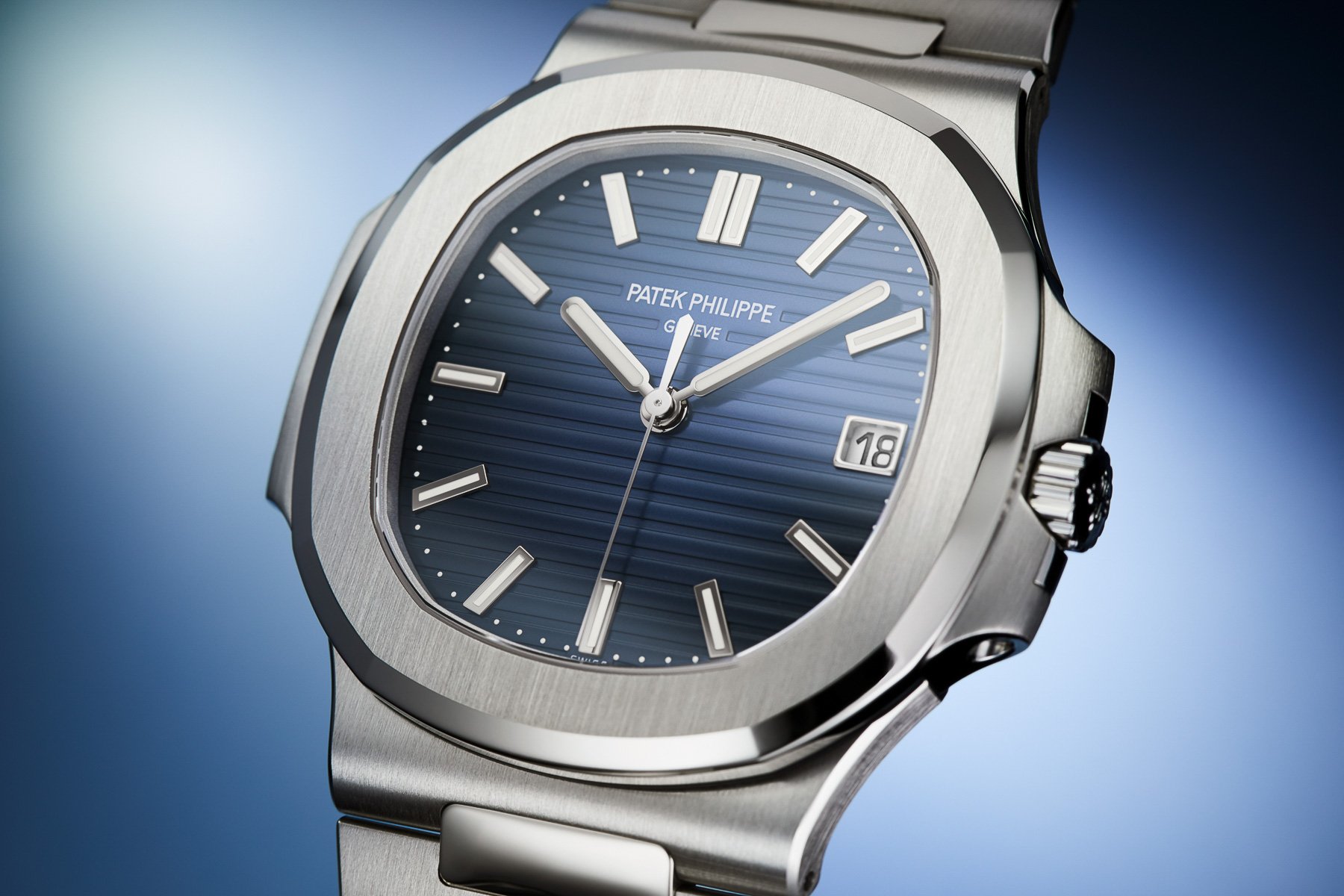
Steel Nautilus pressure and the 5811 platform
Since the discontinuation of the Patek Philippe Nautilus ref. 5711/1A, the modern line has leaned into precious metal, including the white-gold Nautilus ref. 5811/1G. For the 50th anniversary, the market has been pushing for a stainless steel release with genuine intent behind it—not a token allocation.
If a steel Nautilus arrives, we expect one or more of the following:
- A distinct anniversary dial treatment (done tastefully)
- Production controls that keep availability tight
- A long-term “platform” move rather than a one-year novelty
Patek Philippe also continues to treat the Nautilus as a gateway into its high-horology identity. That often means the anniversary conversation spills into complications and finishing—especially where Patek can reinforce the difference between “sport luxury” and true Geneva-level craftsmanship.
Patek Philippe’s Annual Calendar history is also relevant here: the brand introduced its first patented Annual Calendar with the ref. 5035 in the mid-1990s. Expect that lineage to influence 2026 releases across complications—not necessarily in the Nautilus line alone.
If you’re planning to acquire a specific Patek Philippe reference before Geneva, we recommend requesting discreet sourcing assistance through our watch sourcing concierge and reviewing our Patek Philippe collection.
Audemars Piguet: The anniversary was 2025 (founded 1875)
Audemars Piguet was founded in 1875, which makes 2025 the true 150th anniversary year. That matters because it reframes what “anniversary energy” looks like for the brand heading into Watches & Wonders Geneva 2026.
Whether or not Audemars Piguet participates in the fair in the way collectors expect, the broader point is this: the brand has already been in a milestone cycle, and post-anniversary periods often bring two dynamics:
- A consolidation of design language (Royal Oak, Code 11.59) after special releases
- A return to “core” references with refinements that don’t read as commemorative, but still affect demand
What we expect from Audemars Piguet after a milestone year
If Audemars Piguet continues to lean into heritage-meets-modern, watch for:
- Archival references influencing case profiles and dial signatures
- Complications packaged in cleaner, more wearable formats
- A renewed emphasis on finishing details that only matter to serious collectors (and move prices long term)
When demand spikes after Geneva, collectors often reshuffle by trading out of a similar tier to fund a new target. We handle that discreetly through our sell or trade process, with fully insured shipping and transparent review.
| What could move the market | Rolex (Oyster 100) | Patek Philippe (Nautilus 50) | Audemars Piguet (post-150th) |
|---|---|---|---|
| Likely strategy | Subtle catalog evolution | Scarcity + meaningful Nautilus decisions | Refinements after a milestone cycle |
| Release style | Non-commemorative, Rolex-typical | Anniversary influence likely | Heritage cues without overt anniversary branding |
| Secondary market impact | Broad, steady pressure | Sharp spikes on select references | Collector-driven, reference-specific |

Secondary market impact: Florida-first, global in reach
Watches & Wonders announcements don’t just affect boutique windows in Europe—they recalibrate global pricing. When a reference is quietly discontinued or materially improved, the “previous version” often tightens immediately as collectors decide which side of the line they want to own.
From our Florida base, we regularly see three post-Geneva patterns:
- Collectors upgrading into the newest release by selling a current piece
- Buyers prioritizing “last of its kind” references that are now finite
- Increased risk in peer-to-peer channels as hype rises and verification drops
At La Lusso Co., we authenticate every watch we handle and facilitate fully insured FedEx overnight shipping for qualified transactions—domestic and international—so clients can move quickly without compromising on verification.
7 things to monitor during Watches & Wonders Geneva 2026
- Quiet discontinuations: The most important Rolex updates are often silent.
- Movement-level changes: Upgrades that spread across multiple families can be more impactful than a single new dial.
- Case proportion decisions: 37mm–39mm “classic” sizing continues to influence new launches.
- Dial manufacturing: Subtle finishing changes can create meaningful market separation within the same reference.
- Allocation reality: Availability, not announcements, determines what becomes truly liquid.
- Secondary market volatility: Track broader price movement via WatchCharts as news breaks.
- Delivery lag: The gap between Geneva reveal and U.S. availability drives early premiums.
Securing access without compromising verification
The weeks after Geneva are when the market is loud—and when the risk profile rises. New releases bring opportunistic listings, incomplete sets, and avoidable authentication issues.
We operate as a boutique concierge serving collectors globally from Florida. Our process is built around verification, documentation transparency (box, papers, service where applicable), and insured logistics. If you’re positioning your collection ahead of the show—or planning an acquisition shortly after—start with our watch sourcing concierge or speak with a La Lusso Co. concierge through our contact page.
FAQ: Watches & Wonders Geneva 2026
Can I buy watches directly at Watches & Wonders?
No. Watches & Wonders is an exhibition. Orders are typically placed through authorized channels or sourced through specialist dealers after the event.
Will Rolex release a new GMT-Master II in 2026?
A new bezel colorway or configuration is always possible, but Rolex rarely ties sport-model releases to explicit anniversary branding. We watch for discontinuations and movement/case changes more than “commemorative” cues.
Why is the 50th anniversary of the Patek Philippe Nautilus so significant?
Because the Nautilus is structurally scarce, and any meaningful change—especially in steel—has an immediate ripple effect on global demand and pricing.
How soon after the show do new watches reach the U.S. market?
Typically 4–8 weeks, but highly constrained allocations can take longer. If timing matters, request discreet sourcing assistance early.

